The Ultimate Guide to Clean Sunscreen for Babies, Kids & Families (Updated for Summer 2026)
The Complete Guide to Non-Toxic, Mineral Sunscreen for Babies & Kids: What to Know, What to Avoid, and the Best Low-Tox Picks for Summer 2026
This post contains affiliate links, which means I may earn a small commission at no additional cost to you. I only promote products I personally love, would use, and believe in.
When it comes to protecting our kids' skin, sunscreen seems like a no-brainer. But not all sunscreens are created equal, and some contain ingredients that are best avoided, especially for babies and young children.
Because babies’ skin is more delicate and absorbent, what you put on it matters. The goal is simple: protect against UV damage without unnecessary exposure to irritating or questionable ingredients.
Don't want to read the whole post? Find my favorites HERE.
While sunscreen ingredients matter for adults too, little ones have more delicate, absorbent skin, and their bodies are still developing, so choosing safer, simpler formulas is even more important. The goal is to protect them from harmful UV rays without exposing them to potentially irritating or toxic chemicals in the process.
In 2021, an independent lab called Valisure tested dozens of sunscreens and found that some contained benzene, a known carcinogen, at levels exceeding the FDA’s recommended limit of 2 parts per million. Benzene is not an intentional ingredient, but can be introduced during manufacturing.
This doesn’t apply to all sunscreens, but it highlights why formulation and quality control matter. Read more at Valisure and at Consumer Labs.
Let's break down what this means and how to find safe, clean sunscreen options for your whole family this summer.
Chemical vs. Mineral Sunscreen: What’s the Difference?
Chemical sunscreen
These formulas use synthetic UV filters that absorb UV radiation and convert it into heat. Common ingredients include oxybenzone, octinoxate, avobenzone, octisalate, octocrylene, and homosalate.
Some of these filters have raised concerns in both human health and environmental research. Areas being studied include potential hormone disruption, skin sensitivity, and environmental impact like coral reef damage and aquatic toxicity. While research is still evolving and not all findings are conclusive, it’s enough for many people to take a more cautious approach.
Mineral sunscreen
Mineral (or physical) sunscreens use ingredients like zinc oxide and titanium dioxide to sit on the surface of the skin and reflect or scatter UV rays.
Because of their lower potential for skin absorption and generally better environmental profile, I personally recommend mineral-based sunscreens when possible.
Should You Use Sunscreen on Babies?
Sunscreen is generally NOT recommended for babies under 6 months old. Their skin is extra sensitive and more permeable, meaning it can absorb more of what's applied to it. Instead of sunscreen, the best protection is:
Keeping babies in the shade
Using wide-brimmed hats and protective clothing
Avoiding peak sun hours (10am–4pm)
Once your baby is over 6 months, a clean mineral sunscreen applied to exposed areas is appropriate.
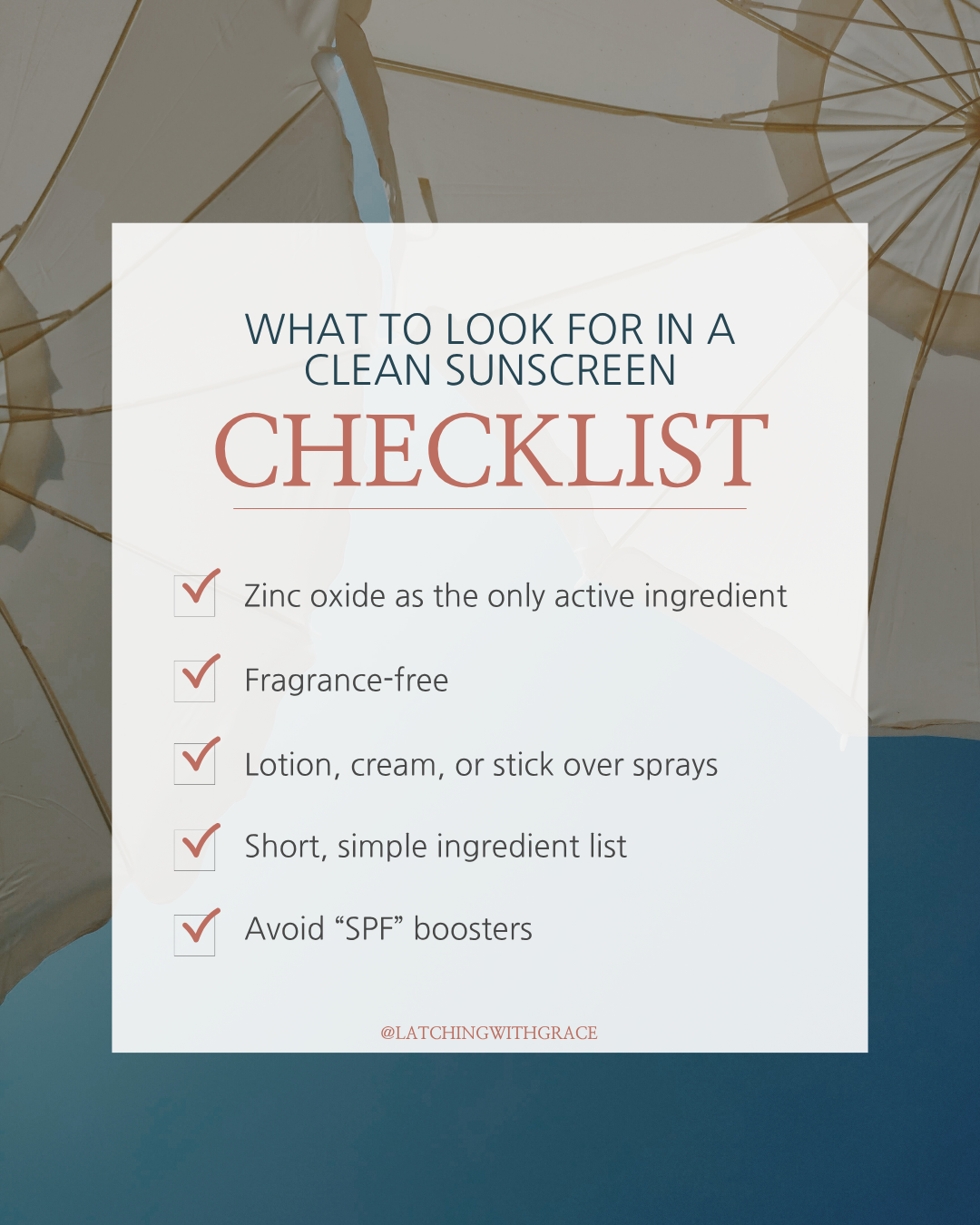
What to Look for in a Clean Sunscreen
When shopping for a low-tox sunscreen, you want to look for:
Zinc oxide as the only active ingredient — This is the gold standard. It provides broad-spectrum protection and sits on top of the skin rather than absorbing into it.
Titanium dioxide is a secondary mineral option, but offers less broad-spectrum coverage than zinc oxide alone.
Short, recognizable ingredient lists — The fewer the ingredients, the better.
Fragrance-free formulas — "Fragrance" is a catch-all term that can hide hundreds of chemicals.
No nanoparticles — Stick with non-nano zinc oxide so particles can't penetrate the skin.
Sunscreen Ingredients to Avoid for Babies and Kids
Here are the top ingredients worth skipping, especially for babies and kids:
Oxybenzone – One of the most concerning chemical UV filters. It's been detected in blood, urine, and breast milk after a single application and is linked to hormone disruption.
Octinoxate – Another chemical UV filter that absorbs into the skin and has been linked to hormonal effects. Banned in Hawaii due to reef damage.
Homosalate – Penetrates the skin and may disrupt hormones. It's found in many "natural-leaning" brands at concerning concentrations.
Octisalate – Penetrates the skin and can act as a penetration enhancer for other chemicals in the formula.
Octocrylene – Has been found to degrade into benzophenone (a potential carcinogen) over time, especially in products that have been sitting in heat.
Avobenzone – The most widely used UVA filter in the U.S. It's unstable and breaks down in sunlight, often requiring other chemicals (like octocrylene) to stabilize it.
Benzophenone – A known contaminant and potential carcinogen found in many chemical sunscreens. The FDA has flagged it as a concern.
Retinyl Palmitate (Vitamin A in sunscreen) – When applied to skin exposed to sunlight, it may speed the development of skin lesions and tumors.
Butyloctyl Salicylate – (see more below) Used as an SPF booster in some formulas marketed as mineral sunscreens. There are concerns about skin penetration, potential endocrine disruption, and lack of reef safety. Some people consider it misleading when brands label sunscreens with this ingredient as "100% mineral" or "reef safe."
Butane, Isobutane, Propane – These are propellants used in spray sunscreens and are believed to be one of the sources of benzene contamination. Even if not listed prominently, they're worth avoiding.
Other Ingredients You Probably Want to Avoid: Disodium EDTA, Nanoparticles, Para-aminobenzoic acid (PABA), Parabens, Phenoxyethanol, Phthalates, Propylene Glycol, Synthetic Fragrances, Monoethanolamine (MEA), Diethanolamine (DEA), Triethanolamine (TEA), Butylated Hydroxytoluene (BHT), Methylisothiazolinone, Benzisothiazolinone, Ethoxylated Ingredients (PEG-, PPG-, poly-, -eth, -oxynol)
For the full list of sunscreens that Valisure found to contain benzene, click here.
What’s The Deal With Butyloctyl Salicylate?
Butyloctyl salicylate is an ingredient you’ll sometimes see in sunscreens marketed as “mineral”, especially sprays. It’s chemically similar to octisalate, a traditional chemical UV filter, but it isn’t officially classified as one. Because of that, brands can include it while still labeling their products as mineral sunscreens.
Its role in a formula is typically to boost SPF performance and improve texture. It can enhance how evenly the sunscreen spreads and may increase how well other ingredients perform.
That said, there are a few things worth knowing:
It may increase skin penetration of other ingredients
Some early research has raised questions about potential endocrine and reproductive effects, though data is still limited
It is not considered reef-safe under certain environmental classification systems
I’m not overly concerned with this ingredient on its own, especially when it appears in otherwise thoughtful formulas. But I do think it creates a gray area when brands market their products as “100% mineral” or “reef safe.”
Right now, most spray sunscreens rely on ingredients like this for performance, so if you prefer a spray format, it’s a trade-off to be aware of.
Why Spray Sunscreens Are Especially Risky
Spray sunscreens may seem convenient, especially with wiggly babies, but they come with trade-offs:
They can be inhaled
Application is often uneven
A significant amount gets lost in the air
For babies and young kids, lotions, creams, and sticks are the safer, more reliable option.
Best Clean Sunscreens for Babies, Kids, and Families (2026)
Shop my favorite nontoxic sunscreen options here!
These are some of the mineral-based brands that are free from sketchy ingredients:
Badger – You really can't go wrong with any of their sunscreens. Simple, clean ingredients and one of the most trusted names in low-tox sun care.
Earth Mama – Both the cream and stick formulas are solid choices. Gentle enough for newborn-adjacent skin.
Pipette – Go for the cream only — skip the spray and stick!
Attitude – Their baby and sensitive skin lotions are both great options.
Raw Elements – Reef-safe, certified natural, and made with non-nano zinc oxide. Comes in sticks and tins — highly effective and seriously clean.
F.A.E. (For All Earth) – A newer brand focused on clean formulas for the whole family. Only available on Thrive Market (to my current knowledge), and the cream is fairly hard to find, but I’ve heard great things!
Fresh Monster – Known for their kid-friendly products with clean ingredients. Their sunscreen keeps the formula simple and effective.
Poofy Organics– USDA certified organic ingredients, free from synthetic chemicals. A great option if you want something truly clean and certified.
Thinkbaby / Think– One of the original "clean" baby sunscreen brands. Widely available, affordable, and consistently well-reviewed for safety.
Two Peas Organics – A small-batch, truly clean brand worth supporting. Simple, gentle, and effective.
Raw Love– Another clean, low-ingredient option that's great for reef-conscious families.
Thrive Natural Care – Sustainably sourced, reef-safe, and made without common chemical filters. A solid choice for the eco-minded mama.
Wotnot Naturals – An Australian brand with strict clean beauty standards. Their sunscreens are certified natural and made for sensitive skin.
Terra Lotus - A small company making tallow based organic sunscreen in the USA with only 6 ingredients! A great choice if you’re looking for this type of sunscreen.
Sky & Sol– Simple, “clean” ingredients, but it’s manufactured in China, where transparency around sourcing, testing, and regulation can be less consistent than in the U.S. or EU. Since sunscreen is regulated as an over-the-counter drug, I personally prefer products made in North America or Europe, where I have more confidence in quality control.
Best Sunscreen Sticks for Kids & Babies (Summer 2026)
Sunscreen sticks are a game-changer for on-the-go application, especially for faces and ears. They're easy to control, don't drip, and are much easier to apply on squirmy kids than lotion. Here are the best clean options:
ThinkBaby Sunscreen Stick – Free from chemical filters and one of the most widely trusted clean baby brands. Easy to apply and great for sensitive skin.
Earth Mama Mineral Sunscreen Stick – Certified organic ingredients, non-nano zinc oxide, and fragrance-free. A go-to for mamas who want the cleanest possible option.
Badger Balm Sunscreen Stick – Badger is one of the most trusted names in clean sun care, and their stick is no exception. Simple ingredients, effective protection.
All Good Sunscreen Stick – Reef-safe and water-resistant. A great option for active days at the beach or pool. Stick with this formula (no spray!).
Attitude Mineral Sunscreen Stick– EWG Verified and made with minimal clean ingredients. Great for sensitive baby and toddler skin.
Babo Botanicals Sensitive Baby Mineral Sunscreen Stick – Lightweight and easy to blend. Just note some Babo formulas contain butyloctyl salicylate, so stick to the stick (pun intended).
Raw Elements Certified Natural Sunscreen Stick– One of the cleanest sticks on the market. Reef-safe, water-resistant, and great for the whole family.
"Cleaner" Spray Sunscreen Options That Still Contain Butyloctyl Salicylate
These spray sunscreens are often marketed as non-toxic, mineral-based, and baby-friendly, and they're far better than conventional options in terms of ingredient transparency and overall safety profile. But it's important to know that they all contain butyloctyl salicylate, an ingredient that some families choose to avoid (especially for babies and young children) due to its potential endocrine-disrupting effects, skin penetration, and lack of reef safety.
That said, here are a few brands that fall into this "cleaner, but not perfect" category:
Babo Botanicals or Babo Botanicals Sensitive Baby (non-aerosol)
What About Vitamin D?
This is an important nuance that often gets overlooked: vitamin D is not produced when UV rays are being filtered, by sunscreen, windows, or clothing.
Current guidelines suggest that about 5 to 30 minutes of direct sun exposure to the face, arms, and legs twice a week, between 10 a.m. and 4 p.m., may help maintain adequate vitamin D levels. The exact time needed can vary based on skin tone, location, season, and more. And of course, the goal is always to avoid burns, so moderation and common sense matter.
A little bit of intentional, safe sun exposure, especially in the early morning or late afternoon, is beneficial for all of us, kids included.
The goal isn’t perfection, it’s balance.
At the end of the day, sunscreen shouldn’t feel overwhelming.
You don’t need a perfect product. You just need a safer one you’ll actually use consistently.
If you stick with a mineral sunscreen, avoid the highest-risk ingredients, and apply it well, you’re doing a really good job protecting your family’s skin.
And remember, sunscreen is just one piece. Shade, hats, and timing your sun exposure matter just as much.
If you found this helpful, you'll love my other non-toxic guides for growing families:
Small, simple swaps can make a big difference for your family's health.
Want More Tips Like This?
Get honest breastfeeding tips, low-tox swaps, and real-life motherhood support straight to your inbox - plus first access to new freebies and guides.