Can You Use Retinol While Breastfeeding?
Disclaimer: This post is for educational purposes only and is not medical advice. Always consult your healthcare provider or dermatologist before starting or resuming any skincare products while breastfeeding.
Is Retinol Safe While Breastfeeding?
Short answer:
Topical retinol is generally considered low risk during breastfeeding, but there are important nuances.
Let’s break it down clearly.
What Is Retinol?
Retinol is a vitamin A derivative commonly used for:
Acne
Fine lines
Hyperpigmentation
Skin texture
It belongs to a class of compounds called retinoids.
Oral retinoids (like isotretinoin/Accutane) are absolutely contraindicated in pregnancy and while breastfeeding and require strict medical supervision.
Topical retinol is different.
Does Retinol Pass Into Breast Milk?
Here’s what we know:
Topical retinol has minimal systemic absorption when used correctly.
Very little enters the bloodstream.
Even less would theoretically pass into breast milk.
According to available pharmacology data, topical retinoids are considered low risk during breastfeeding when: (LactMed, MotherToBaby)
Used in small amounts
Applied to limited surface areas
Not applied to the chest or areas where baby could ingest it
There is no strong evidence showing harm from topical use during lactation.
However, research in breastfeeding specifically is limited.
What to Avoid
Do not apply retinol to your breasts or nipple area.
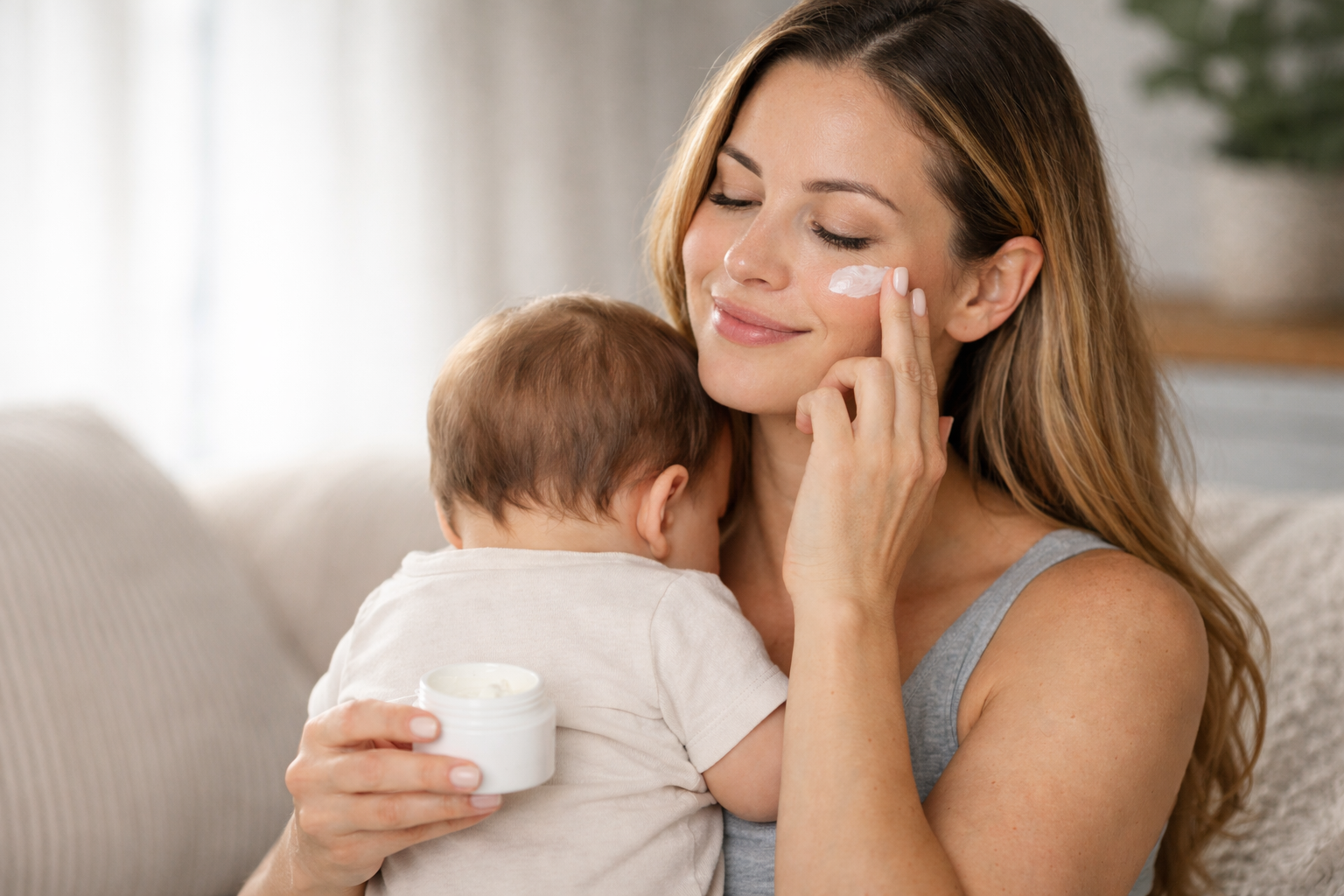
Avoid letting baby’s skin come into contact with treated areas.
Avoid oral retinoids completely while breastfeeding.
If you are using prescription-strength tretinoin, discuss it with your provider. Higher concentrations mean greater potential systemic absorption compared to OTC retinol.
Why It’s Different From Pregnancy
During pregnancy, retinoids are avoided because they can affect fetal development.
Breastfeeding is different because:
The baby is no longer developing organs in utero.
Transfer through milk is extremely limited with topical use.
Risk profiles are not the same.
A Gentle Retinol Option to Consider
If you’re looking for a lower-strength option, this is the gentle, affordable, low-tox retinol I’ve personally used and felt comfortable with while breastfeeding.
As with any retinol, it’s best to start slowly. Use a small amount 2–3 nights per week, apply only to the face (not the chest area), and increase gradually as your skin tolerates it. Always patch test first and check with your provider if you have specific concerns.
If You’re Still Nervous:
Alternatives during breastfeeding:
Azelaic acid
Vitamin C
Niacinamide
Bakuchiol (a plant-based retinol alternative — not a retinoid, so no systemic absorption concerns)
These can help with:
Pigmentation
Acne
Texture
Without the same theoretical concerns.
The Bottom Line
For most breastfeeding mothers, occasional topical retinol use on the face is considered low risk.
That said:
Use the lowest effective strength.
Avoid large body applications.
Talk with your dermatologist or OB if unsure.
And remember: breastfeeding does not mean you have to ignore your skin concerns throughout your breastfeeding journey.
You’re allowed to care about your skin, too.