What to Do When Your Baby Bites While Breastfeeding (and Why It Happens)
If your baby has started biting while nursing, you’re not alone.
It can catch you completely off guard and honestly… it hurts. A lot!
This post may contain affiliate links, meaning I may earn a small commission at no extra cost to you.

The good news is that biting does not mean your breastfeeding journey has to end. For most babies, this is a short phase that you can move through with a few simple strategies and a little awareness of what’s causing it.
Let’s talk about why it happens and what actually helps.
Why Babies Bite While Nursing
There are a few common reasons babies start biting during breastfeeding, and most of them are completely normal developmental phases.
Teething discomfort
Teething gums can be sore and inflamed, and pressure can feel relieving. Some babies instinctively bite down when their gums are bothering them.
Distraction
As babies get older, they become much more aware of the world around them. Sometimes biting happens when they pop on and off the breast or when their attention shifts away from feeding.
The end of a feed
Many babies bite when they’re finished nursing but still lingering at the breast. If they’re no longer actively sucking, they may clamp down.
Cause and effect
Babies are little scientists. If biting gets a big reaction, it can quickly turn into a game. Even a surprised “ouch!” can unintentionally reinforce the behavior.
The Most Important Thing to Know

During active nursing with a deep latch, babies usually can’t bite.
When a baby is latched deeply, their tongue extends over their lower gumline, which makes biting physically difficult.
Biting usually happens when:
baby slips into a shallow latch
baby stops actively sucking
baby is finished feeding but still latched
So the key isn’t trying to “stop biting” in the moment. It’s learning to catch the moment right before it happens.
Watch for These Signs
Most babies give subtle warnings before they bite. Once you start noticing them, you’ll feel a lot more in control during feeds.
Look for:
jaw stiffening
slowing or stopping sucking
tongue pulling back
a change in latch pressure
baby starting to look around or play
If you see any of these, gently break the latch before the bite happens.
An easy way to do this is to slide your pinky finger into the corner of your baby’s mouth to release the suction.
Offer Something to Chew Before Nursing

If teething is part of what’s causing the biting, giving your baby something to chew on before latching can make a big difference.
Cold pressure can help soothe inflamed gums and reduce that urge to bite once they’re at the breast.
Some good options:
a chilled washcloth they can gnaw on
a breastmilk popsicle
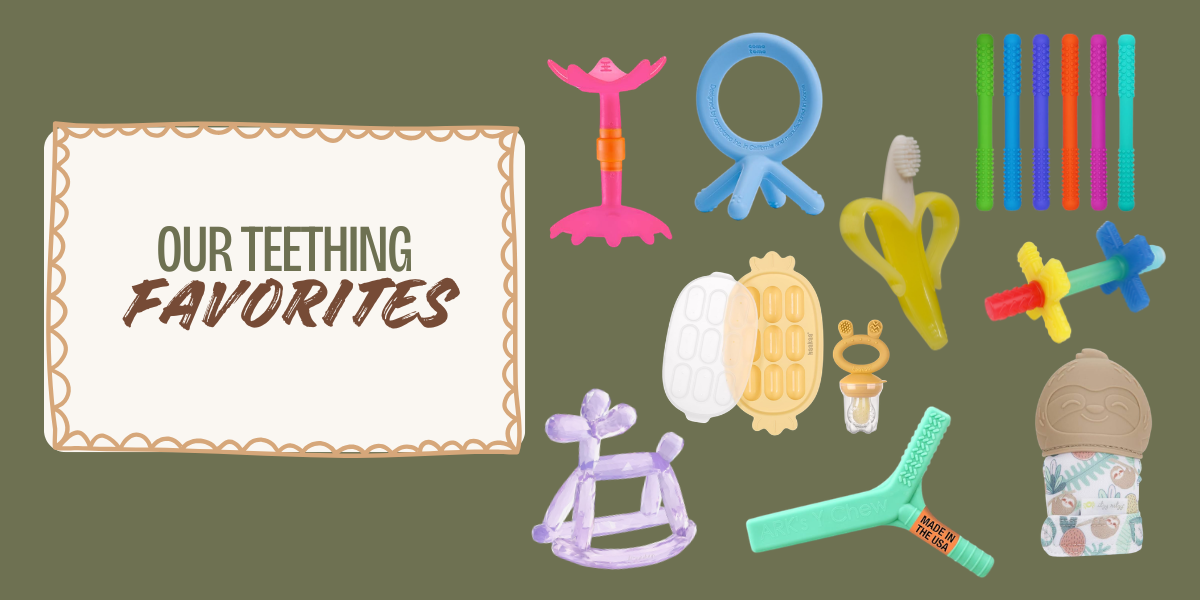
a silicone teether
a refrigerated teething toy
Anything soft, flexible, and easy for little hands to hold tends to work best.
What To Do If Your Baby Bites
If a bite does happen, try to keep your response calm and consistent.
unlatch immediately
calmly say something simple like:
“No biting. That hurts.”pause for a moment before relatching
This short pause helps your baby start to associate biting with the feed stopping.
You don’t need to scold or react dramatically. A clear, calm response is enough.
A Helpful Trick for the End of Feeds
If your baby tends to bite right at the end of nursing, don’t wait for it.
When they start to slow down and switch to comfort sucking, you can unlatch them first.
This prevents that final clamp-down moment that catches so many moms off guard.
If Your Baby Already Has Teeth
This is the part many parents worry about most.
But even with teeth, breastfeeding can absolutely continue.
A few important things to remember:
a deep latch helps protect your nipple
most bites happen when baby is not actively feeding
biting is usually a temporary developmental phase
It’s very common during teething periods and tends to pass once babies learn that biting ends the feed.
Want More Tips Like This?
Get honest breastfeeding tips, low-tox swaps, and real-life motherhood support straight to your inbox - plus first access to new freebies and guides.
One More Thing I Want You to Hear
Teething while breastfeeding can feel really nerve-wracking.
A lot of moms worry that teeth automatically mean the end.
They don’t.
Most babies move through this phase quickly once they understand the boundary and once their gums feel better.
You can absolutely keep breastfeeding with teeth involved. 🦷